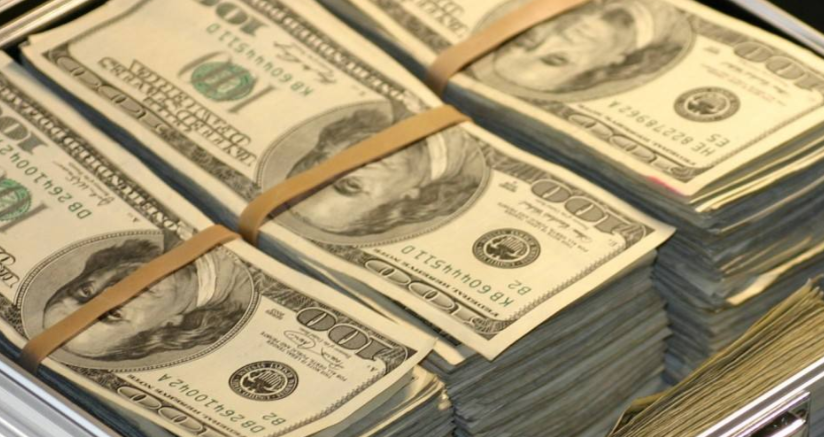
Let's cut through the textbook jargon. Foreign exchange reserves aren't just a line item on a central bank's balance sheet that only economists care about. They're the financial shock absorbers for a country's entire economy, and their size and management directly impact the value of your savings, the cost of your imports, and the stability of your job. Think of them as a nation's emergency fund, but instead of cash under the mattress, it's a giant, globally-traded portfolio of foreign currencies, gold, and other assets held by the central bank. When managed well, you barely notice them. When they're mismanaged or depleted, it can lead to currency crashes, hyperinflation, and economic crises that hit everyone's wallet.
What You’ll Discover
- What Are Foreign Exchange Reserves? (Beyond the Textbook Definition)
- Why Do Countries Hoard Foreign Currency? The 3 Core Objectives
- How Are Forex Reserves Actually Managed? A Look Inside the Vault
- The Real-World Impact: How Reserves Shape Your Financial World
- Common Misconceptions and Expert Insights
- Your Burning Questions on Forex Reserves Answered
What Are Foreign Exchange Reserves? (Beyond the Textbook Definition)
Officially, foreign exchange reserves (forex reserves or FX reserves) are external assets held by a country's central bank or monetary authority. But that's dry. In practice, it's the government's pile of money it can use to pay bills to other countries and defend its own currency.
I remember looking at a central bank's annual report early in my career, expecting a simple list. It wasn't. The composition was a strategic puzzle. It's not just US dollars, though they dominate. A typical reserve stash includes:
- Foreign Currency & Securities: Mostly US Treasury bonds, but also euros, yen, British pounds, and Chinese yuan. These are liquid, earn some interest, and are accepted everywhere.
- Gold: The classic safe-haven asset. It's nobody else's liability and holds value during geopolitical storms.
- Special Drawing Rights (SDRs): An international reserve asset created by the International Monetary Fund (IMF). Think of it as a basket of major currencies (USD, EUR, CNY, JPY, GBP) that countries can exchange for hard currency.
- Reserve Position in the IMF: Essentially a line of credit a country can draw from the IMF quickly.
The key here is liquidity and safety. These assets need to be readily convertible into cash to meet international obligations without causing a market panic. You won't find illiquid real estate or volatile tech stocks in a serious reserve portfolio.
A Quick Analogy: Imagine you run a household that mostly uses Company A's scrip (your local currency). But to buy a crucial medicine only sold by Company B, you need Company B's scrip (foreign currency). Your forex reserves are the stash of Company B's scrip you keep in a safe. If you run out, you're at the mercy of whoever will exchange scrip with you, likely at a terrible rate. That's a currency crisis in a nutshell.
Why Do Countries Hoard Foreign Currency? The 3 Core Objectives
Countries don't accumulate these reserves for fun. It's expensive (those bonds could be used for domestic projects) and carries risk (currency values fluctuate). They do it for three critical, often overlapping, reasons:
1. To Pay Their International Bills (Liquidity)
This is the most straightforward use. Countries need foreign currency to pay for imports like oil, medicine, and machinery. They also need it to service foreign-denominated debt. If a government owes $1 billion in bond payments and only has its local currency, it must sell that currency on the open market to buy dollars. A large, sudden sell-off can crush the currency's value. Reserves provide a direct source of payment, smoothing out these transactions.
2. To Influence Their Currency's Value (Intervention)
This is where it gets tactical. If a country's currency is falling too fast (depreciating), causing imported inflation, the central bank can sell its foreign reserves (e.g., dollars) and buy its own currency. This increases demand for the local currency, supporting its price. Conversely, if the currency is rising too fast (appreciating), hurting exporters, the bank can sell its local currency and buy foreign reserves, weakening the currency. It's like a giant in the currency market, using its reserves as ammunition.
I've watched trading desks light up when a central bank is suspected of intervening. The signal isn't always a loud announcement; sometimes it's an unnatural, sustained move against the market tide that hints at deep pockets at work.
3. To Inspire Confidence (A Psychological Shield)
Perhaps the most underrated function. A large, visible pile of reserves acts as a deterrent. It tells currency speculators, "Think twice about betting against us; we have the firepower to defend our currency." This confidence can prevent a panic from starting in the first place. It reassures foreign investors that they can get their money out, which keeps capital flowing in. It's a credibility marker, similar to a high credit score.
How Are Forex Reserves Actually Managed? A Look Inside the Vault
Managing trillions in reserves isn't about picking hot stocks. It's a conservative, risk-averse process with a clear hierarchy of priorities: Safety > Liquidity > Return. Return is a distant third.
Most reserves are managed by the central bank's internal investment teams or outsourced to a few elite global asset managers. The strategy is typically outlined in public reports from institutions like the IMF or the central bank itself.
Let's break down the two main strategic approaches I've seen debated in policy circles:
The Traditional (Passive) Approach: Park the money in highly-rated, short-to-medium-term government bonds (like US Treasuries or German Bunds). The goal is capital preservation and instant access. It's boring but safe. This is what most countries do with the bulk of their reserves.
The Strategic (Active) Approach: A small, separate tranche of reserves might be invested for slightly higher returns, venturing into agency bonds, high-grade corporate debt, or even a tiny sliver of equities. The key word is separate. This "investment tranche" is ring-fenced so that a loss doesn't jeopardize the core liquidity needed for intervention. Only a handful of countries with massive reserves, like China or Singapore, operate meaningfully on this frontier.
A common mistake observers make is assuming all reserves are idle cash. They're not. They're almost entirely invested in interest-bearing securities. The "return" is secondary, but it's not zero. The income from US Treasuries held by foreign central banks is a non-trivial financial flow in the global system.
The Real-World Impact: How Reserves Shape Your Financial World
This isn't abstract. Let's connect the dots to your life.
Scenario 1: The Imported Gadget. You buy a smartphone made abroad. The local importer needs dollars to pay the manufacturer. If your country has ample reserves, the transaction is smooth, and currency stability keeps the phone's price in check. If reserves are low and the local currency is weak, that phone gets more expensive every month. Reserves help tame imported inflation.
Scenario 2: Your Friend's Factory Job. Your friend works at an export factory. If the local currency becomes too strong too fast (say, due to hot money inflows), her company's products become expensive for foreigners, orders drop, and layoffs follow. A central bank with sufficient reserves can intervene to prevent excessive appreciation, indirectly protecting her job.
Scenario 3: Your Diversified Investment Portfolio. You own some emerging market bonds or stocks. You check the country's reserve levels as a key health indicator. Strong and stable reserves suggest lower risk of a sudden devaluation that would wipe out your returns in dollar terms. Weak or rapidly falling reserves are a giant red flag. I've seen more portfolios blown up by ignoring reserve trends than by any stock-picking error.
Consider the contrast between two countries:
Switzerland: Has enormous reserves relative to its economy. This allows the Swiss National Bank to aggressively intervene to prevent the Swiss franc from soaring too high and crushing its export and tourism sectors. They've been active buyers of euros and dollars for years, making their reserve management a daily market reality.
Argentina (Historical Example): Has repeatedly faced reserve depletion. When confidence evaporates, people and businesses rush to convert pesos to dollars. The central bank, with empty coffers, can't stop the rout. The peso plummets, inflation explodes, and the economy contracts. The pain is felt in supermarkets and bank accounts nationwide.
Common Misconceptions and Expert Insights
After following this topic for years, here are the nuances most generic articles miss:
Misconception 1: "More Reserves Are Always Better." Not true. There's an optimal level. Hoarding reserves has major costs. The local currency used to buy those foreign assets could have been used for domestic investment in infrastructure or education. There's also an opportunity cost—the yield on safe US Treasuries is often lower than what the country could earn investing at home. Excessively large reserves can also draw political criticism for being wasteful.
Misconception 2: "Reserves Are a Country's Savings Account." This is misleading. A savings account is for future spending. Reserves are primarily for stability and liquidity. You don't dip into your emergency fund to buy a new TV. Similarly, using reserves to fund routine government spending is a recipe for disaster—it signals desperation and erodes confidence instantly.
Misconception 3: "Only the Size Matters." The composition is equally critical. A country with $500 billion in reserves, but all in a single foreign currency that's itself weakening, is less secure than one with $300 billion diversified across currencies, gold, and SDRs. The IMF's Adequacy of Reserves metrics look at factors like short-term external debt and broad money supply, not just a raw number.
One subtle point I learned from a former reserve manager: the velocity of outflows matters more than the static level. Losing $20 billion in reserves over a year is manageable for a large holder. Losing $20 billion in a week is a crisis, regardless of the total left. Market psychology shifts from "they have plenty" to "how much do they have left for tomorrow?"
Your Burning Questions on Forex Reserves Answered
Foreign exchange reserves are the silent guardians of global economic stability. They work best when you don't have to think about them. By understanding what they are, why they exist, and how they're managed, you gain a powerful lens through which to view currency risk, international investing, and the economic forces that shape your financial well-being. It's not just central bank trivia; it's practical knowledge for navigating an interconnected world.